Aluminum die casting is a high-pressure manufacturing process in which molten aluminum alloy is injected into a precision-machined steel mold (die) at pressures ranging from 1,500 to 25,000 psi, then rapidly cooled and ejected as a near-net-shape part. The entire cycle — from injection to part ejection — typically takes 15 to 60 seconds, making it one of the fastest methods for producing complex metal components at scale. This article walks through every stage of the process in sequence.
Before any casting begins, engineers select the appropriate aluminum alloy based on the mechanical requirements of the final part. The most widely used die casting alloys belong to the 380 and 383 series, which offer an excellent balance of fluidity, strength, and corrosion resistance.
| Alloy | Tensile Strength (MPa) | Key Advantage | Typical Application |
|---|---|---|---|
| A380 | 325 | High fluidity, easy to cast | Engine brackets, housings |
| A383 | 310 | Better hot cracking resistance | Complex thin-wall parts |
| A360 | 300 | Superior corrosion resistance | Marine components |
| ADC12 | 320 | Excellent machinability | Automotive transmission parts |
Aluminum ingots are loaded into a furnace and melted at approximately 660°C (1,220°F). The melt is then held at a controlled temperature — typically 680–720°C — to maintain optimal viscosity for injection. Degassing treatment (using nitrogen or argon) removes dissolved hydrogen, which would otherwise create porosity defects in the finished casting.
The die (mold) is the most capital-intensive element of the process. A typical aluminum die casting tool is machined from H13 tool steel and must withstand thousands of thermal cycles. Tooling costs range from $5,000 for simple single-cavity dies to over $100,000 for multi-cavity, complex geometries.
Before production begins, the die is preheated and coated with a water-based die release lubricant. This prevents metal from soldering (sticking) to the steel and extends die life, which averages 100,000–500,000 shots depending on part complexity and alloy.
The injection cycle is the core of die casting. In a cold-chamber machine (standard for aluminum due to its high melting point), a measured amount of molten metal — called a "shot" — is ladled into the shot sleeve, then driven into the die by a hydraulic plunger in four distinct phases.
The plunger moves slowly at 0.1–0.5 m/s to push the metal to the gate without trapping air in the shot sleeve. Speed is critical here: too fast and air is entrained; too slow and premature solidification occurs.
At the transition point (gate), the plunger accelerates to 2–8 m/s. The die cavity fills in 10–100 milliseconds. This high velocity is necessary to fill thin walls and fine details before the metal solidifies. Gate velocities typically reach 30–60 m/s.
Immediately after fill, a secondary hydraulic intensifier boosts pressure to 10,000–20,000 psi. This compacts the solidifying metal, reduces shrinkage porosity, and improves mechanical properties. Intensification typically lasts 2–10 seconds.
The part solidifies under pressure. Cooling time depends on wall thickness — roughly 1 second per millimeter of wall thickness. A part with a 3 mm wall may solidify in 5–10 seconds total cycle time, while a thick structural component may require 30+ seconds.
Once the part has solidified sufficiently, the ejector half of the die opens and ejector pins push the casting out of the cavity. At ejection, the part temperature is typically 200–350°C — hot enough to deform if mishandled but solid enough to maintain shape.
The casting comes out attached to the runner, biscuit (the solidified metal in the shot sleeve), and overflow tabs. These are collectively called the "shot" or "tree." After ejection, the die closes, lubricant is reapplied, and the next shot cycle begins — all within seconds.
The runner system and flash (thin metal fins that seep into die parting lines) must be removed. This is done through:
Runner and biscuit scrap is returned directly to the melting furnace. In a well-run operation, scrap recycle rates exceed 95%, making die casting a material-efficient process.
Die cast parts often require secondary operations to meet final dimensional and functional specifications.
Holes, threads, and critical mating surfaces are machined post-casting. Because die casting achieves dimensional tolerances of ±0.1–0.3 mm as-cast, machining stock is minimal — typically 0.5–1.5 mm per surface — keeping cycle times short.
Standard die castings are not heat-treatable due to subsurface porosity (which causes blistering at solution treatment temperatures). However, vacuum die casting and squeeze casting produce low-porosity parts that can undergo T5 or T6 heat treatment, boosting tensile strength by 20–40%.
Every production run involves structured quality checks. Common inspection methods and the defects they target are summarized below.
| Inspection Method | Defects Detected | Detection Depth | Typical Use Case |
|---|---|---|---|
| Visual / CMM Dimensional | Flash, surface defects, dimensional non-conformance | Surface only | 100% inspection for critical dimensions |
| X-Ray / CT Scan | Internal porosity, cold shuts, shrinkage voids | Full volume | Safety-critical automotive / aerospace parts |
| Dye Penetrant (PT) | Surface cracks, porosity open to surface | Surface / near-surface | Pressure-tight components |
| Leak Testing | Through-porosity, incomplete fill | Functional | Hydraulic valves, pump housings |
| Spectroscopic Analysis | Alloy composition deviation | Material | First article and heat verification |
Industry-standard acceptable porosity levels for structural automotive parts are defined by ASTM E505 or OEM-specific grades. Most tier-1 suppliers target a defect rate below 50 ppm (parts per million) for safety-critical castings.
The quality of an aluminum die casting is determined by how well operators control a set of interdependent variables. Even small deviations compound across the cycle.
Aluminum die casting becomes economically competitive at volumes above approximately 5,000–10,000 parts per year, where tooling amortization per part drops below alternative processes. At high volumes, piece part costs can reach as low as $0.50–$5.00 for small to medium components.
| Stage | Time | Notes |
|---|---|---|
| Die spray and close | 3–6 s | Automated robotic spraying |
| Metal ladling / shot fill | 2–4 s | Cold-chamber ladle transfer |
| Injection (slow + fast + intensification) | 1–3 s | Die fill in <100 ms; pressure hold 2–10 s |
| Cooling / solidification | 8–20 s | Dominant variable for cycle time |
| Die open and part ejection | 2–4 s | Ejector pins actuate; robot extracts part |
| Total cycle | ~20–40 s | ~90–180 shots/hour |
Cooling time is the single largest lever for improving output. Conformal cooling channels (3D-printed into the die insert) can reduce cooling time by 20–40% compared to conventional drilled lines, directly increasing shots per hour.
Standard high-pressure die casting (HPDC) has inherent porosity limitations. Several process variants address this for demanding applications:
Aluminum die casting is the process of choice when a design demands complex geometry, thin walls (as low as 0.8 mm), tight tolerances, and high volume simultaneously. Its advantages over competing processes are clear:
| Process | Min. Wall (mm) | Tolerance (±mm) | Ideal Volume | Porosity Risk |
|---|---|---|---|---|
| HPDC (Die Casting) | 0.8 | 0.1–0.3 | >10,000 | Medium |
| Sand Casting | 3.0 | 0.5–1.5 | <500 | Low |
| Permanent Mold (Gravity) | 2.0 | 0.3–0.8 | 1,000–20,000 | Low |
| CNC Machining (from billet) | 0.5 | 0.01–0.05 | <1,000 | None |
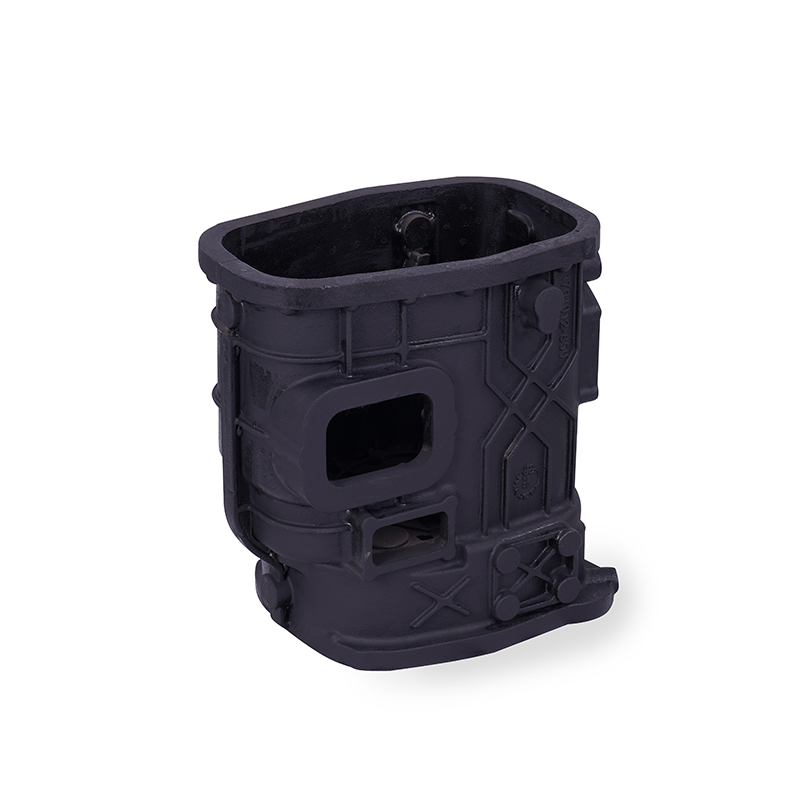
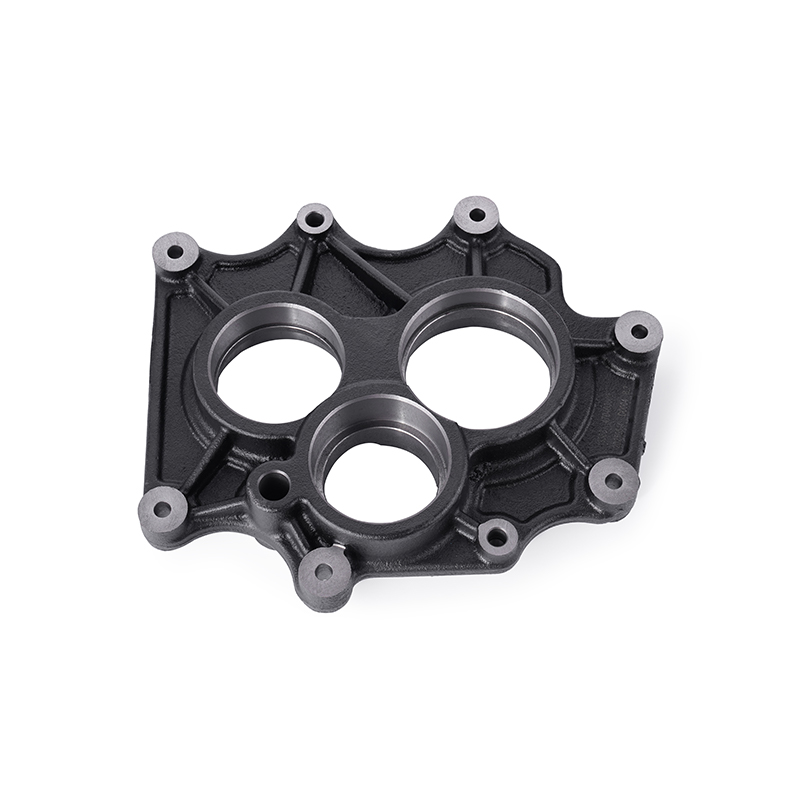
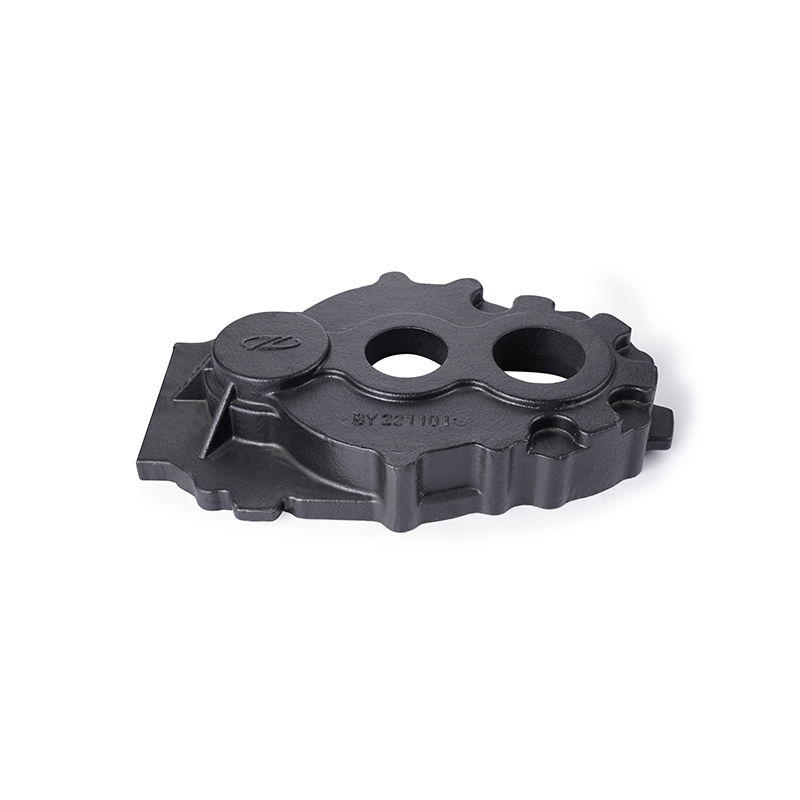
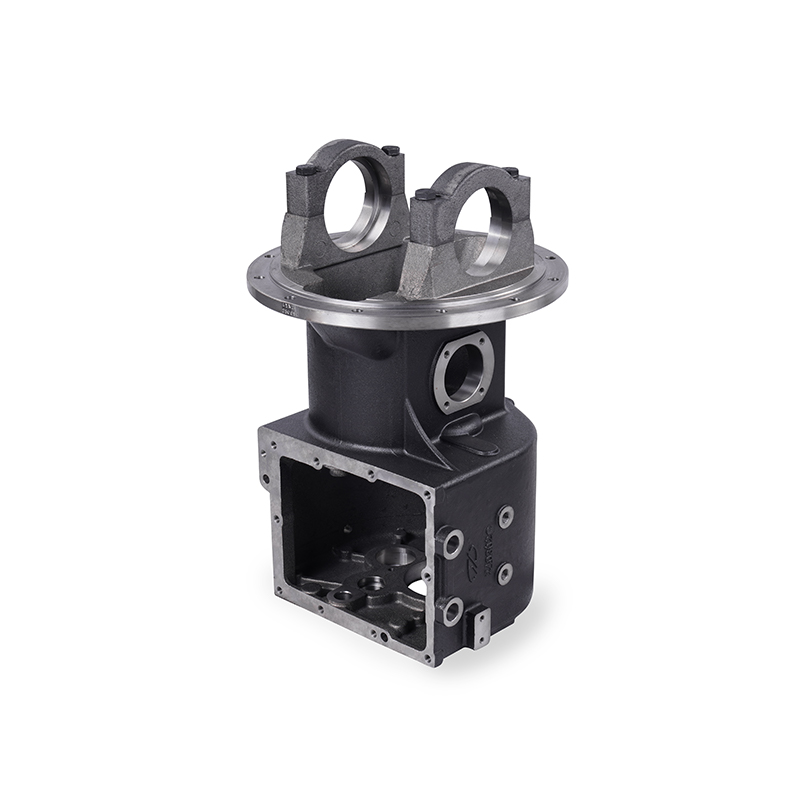
The automotive industry accounts for approximately 75% of all aluminum die casting production, using it for engine blocks, transmission cases, oil pans, battery housings for EVs, and structural body nodes. Consumer electronics (laptop chassis, smartphone frames) and industrial equipment (pump housings, hydraulic manifolds) are also major markets.
The process's combination of speed, dimensional consistency, and material efficiency makes it irreplaceable for high-volume complex metal parts — a position it is likely to hold as EV adoption drives demand for lightweight aluminum structures.




 русский
 日本語
日本語