When you are sourcing iron castings for transmission housings, pump bodies, or structural components, the choice between ductile iron and grey cast iron is one of the most common engineering decisions we see in our foundry every day. Both materials belong to the cast iron family, but their mechanical behavior and application suitability differ significantly. Over the years working with agricultural machinery, automotive parts, and construction equipment, we have learned that understanding these differences is essential for making a cost-effective and reliable design choice. Let me walk you through the key points we consider when recommending one over the other.
Grey cast iron, also called gray iron, gets its name from the gray fracture surface caused by graphite flakes. During solidification, carbon precipitates as flake graphite, which gives the material excellent vibration damping and thermal conductivity but also creates stress concentration points that reduce tensile strength and ductility. Typical grey iron grades (e.g., ASTM A48 Class 25-40) have tensile strengths ranging from 20,000 to 40,000 psi. It is relatively brittle and has almost no elongation.
Ductile iron, also known as nodular iron or spheroidal graphite iron, was developed in the 1940s by adding magnesium or cerium to molten iron, causing graphite to form spherical nodules instead of flakes. This nodular structure eliminates the stress raisers, resulting in much higher tensile strength (typically 60,000-120,000 psi), significant elongation (2-18%), and good impact resistance. Ductile iron can bend before breaking, making it a versatile alternative to steel castings in many applications.
The table below summarizes the most important mechanical differences we use daily when advising clients on material selection for their cast components.
| Property | Grey Cast Iron | Ductile Iron |
|---|---|---|
| Tensile Strength (psi) | 20,000 – 45,000 | 60,000 – 120,000 |
| Yield Strength (psi) | None (no yield point) | 40,000 – 90,000 |
| Elongation (%) | < 0.5 | 2 – 18 |
| Impact Toughness (ft-lb) | < 5 | 7 – 25 |
| Vibration Damping | Excellent (highest of all cast irons) | Good but lower than grey iron |
| Thermal Conductivity | Higher (~45 Btu/ft·hr·°F) | Moderate (~30 Btu/ft·hr·°F) |
| Machinability | Excellent (graphite acts as lubricant) | Good, but requires harder tooling |
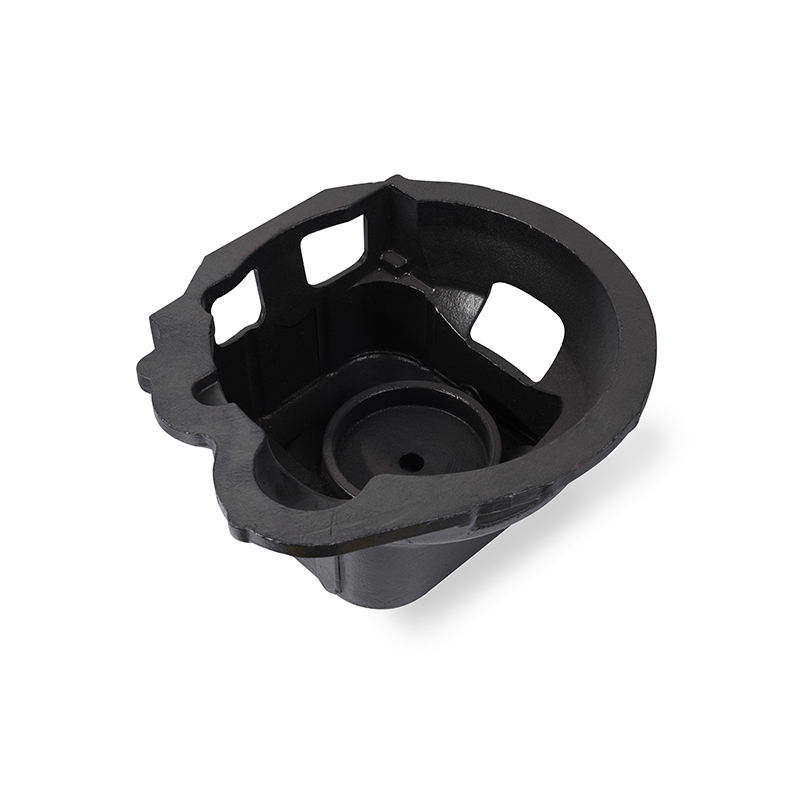
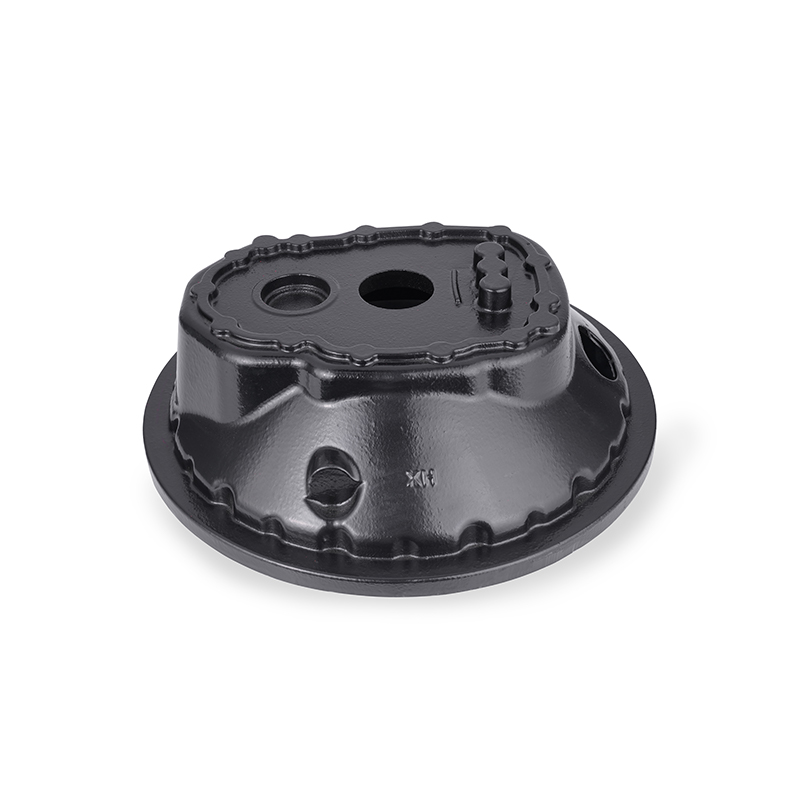
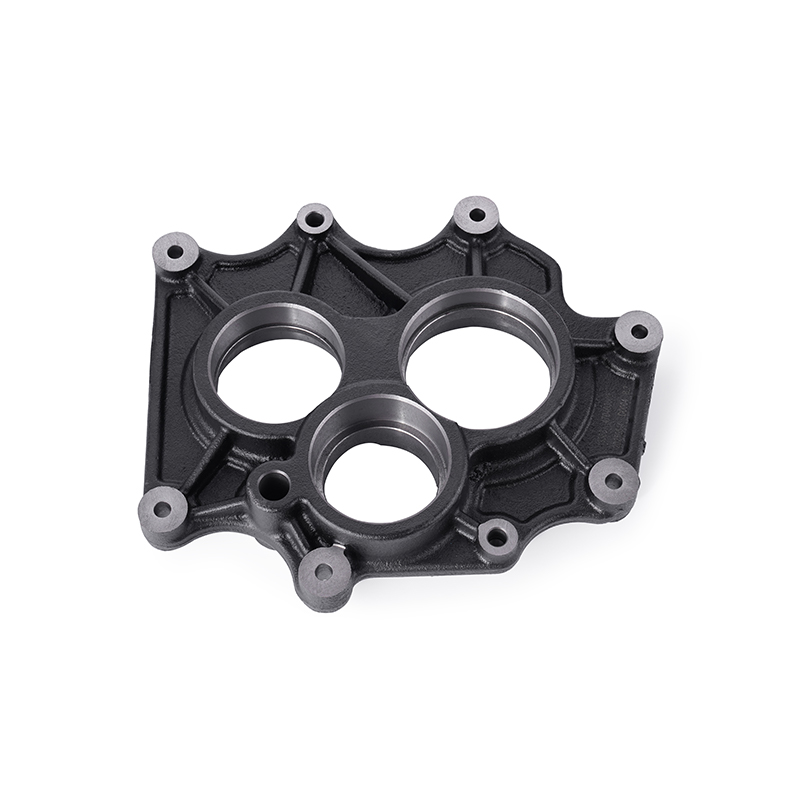
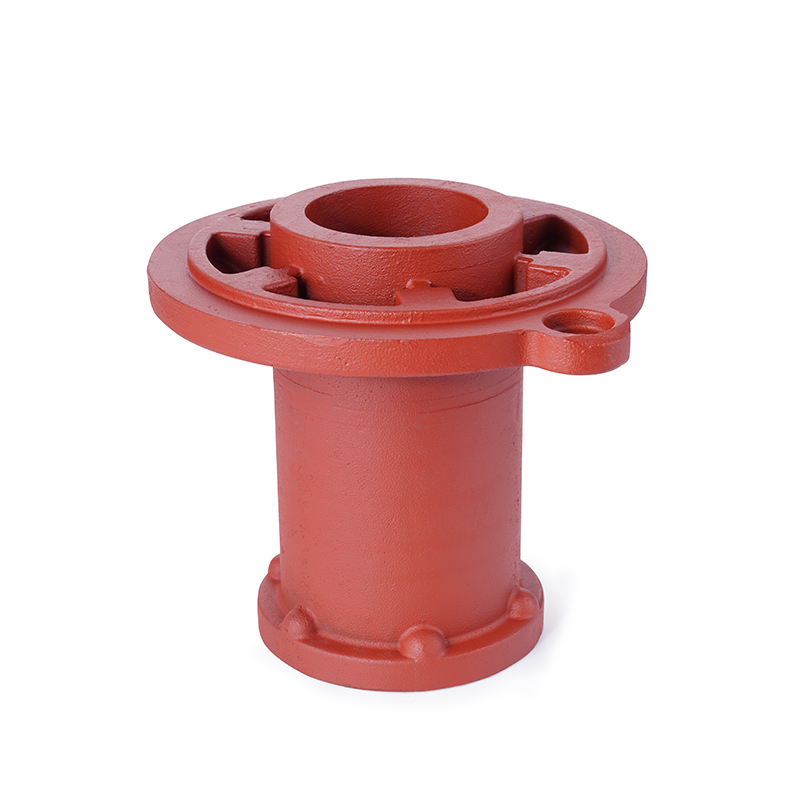
| Relative Cost | Lower (simpler production) | Moderate (due to magnesium treatment)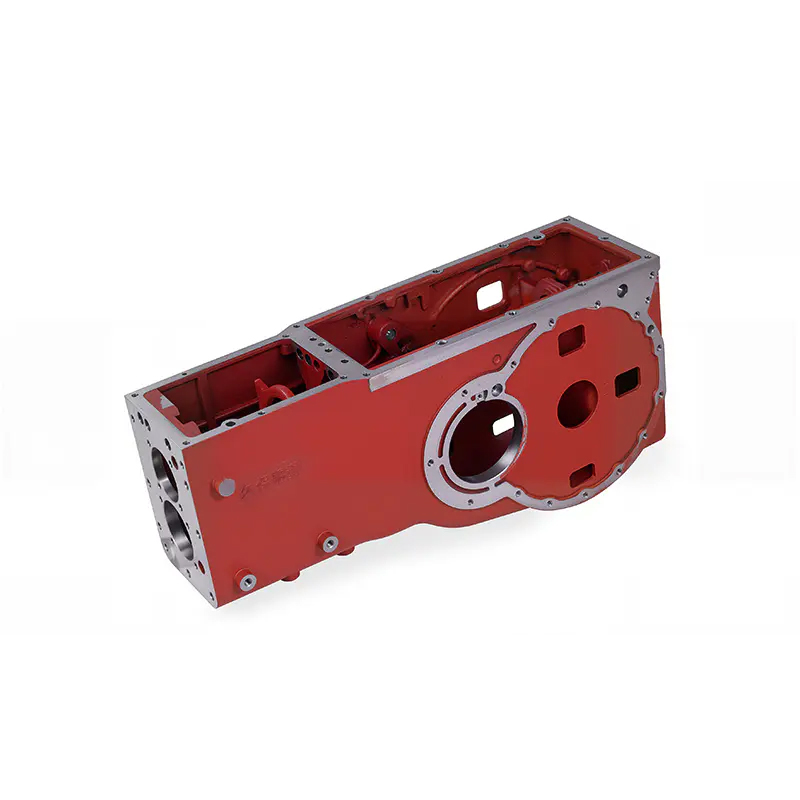 Gray Cast Iron Tractor Transmission HousingThis housing provides structural support and torque resistance for tractor drivetrains, balancing strength with excellent vibration damping and thermal management.View Product → Gray Cast Iron Tractor Transmission HousingThis housing provides structural support and torque resistance for tractor drivetrains, balancing strength with excellent vibration damping and thermal management.View Product → |
As you can see, the primary trade-off is strength and ductility versus damping and thermal conductivity. We often remind our customers that no single material is universally better; the right choice depends on the specific loading and environmental conditions.
Grey iron is the go-to material when the design prioritizes vibration absorption, thermal management, and low cost. Its flake graphite structure makes it naturally effective at damping noise and vibration, which is why we see it used extensively in engine blocks, brake rotors, gearbox housings, and machine tool beds. In our own production, components like agricultural tractor transmission housings and forklift torque converter housings are often cast in grey iron because they benefit from improved thermal conductivity and reduced vibration transmitted to the operator. For applications where the part will see primarily compressive loads and minimal shock, grey iron provides excellent service life at a lower price point.
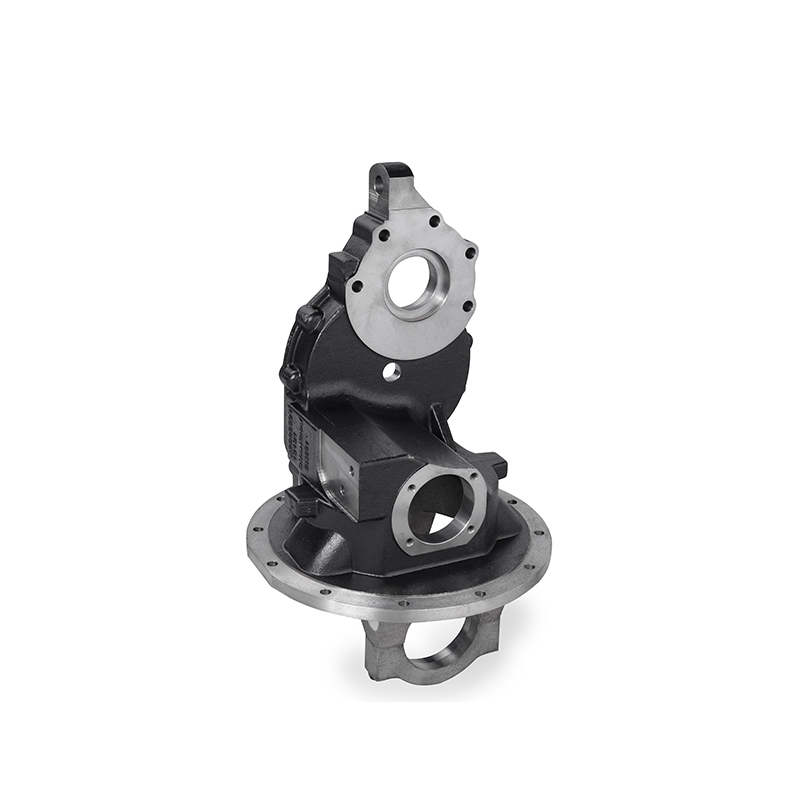
Ductile iron becomes the preferred material when the component must withstand impact, fatigue, or significant tensile stress. Its nodular graphite structure gives it the ability to deform plastically before fracture, making it much safer for load-bearing parts such as crankshafts, connecting rods, suspension components, and gearboxes that see dynamic loading. We also recommend ductile iron for parts that need to be welded or that must maintain dimensional stability under fluctuating temperatures. For example, in our foundry, we produce ductile cast iron gearbox housings and half-axle housings for agricultural equipment, where the higher strength and toughness directly improve reliability in the field.
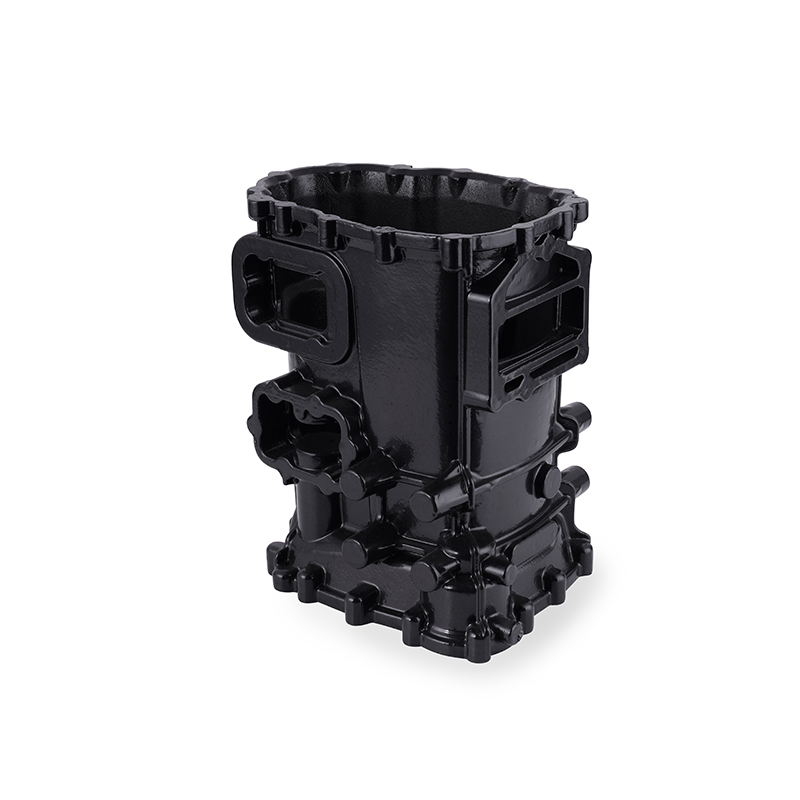
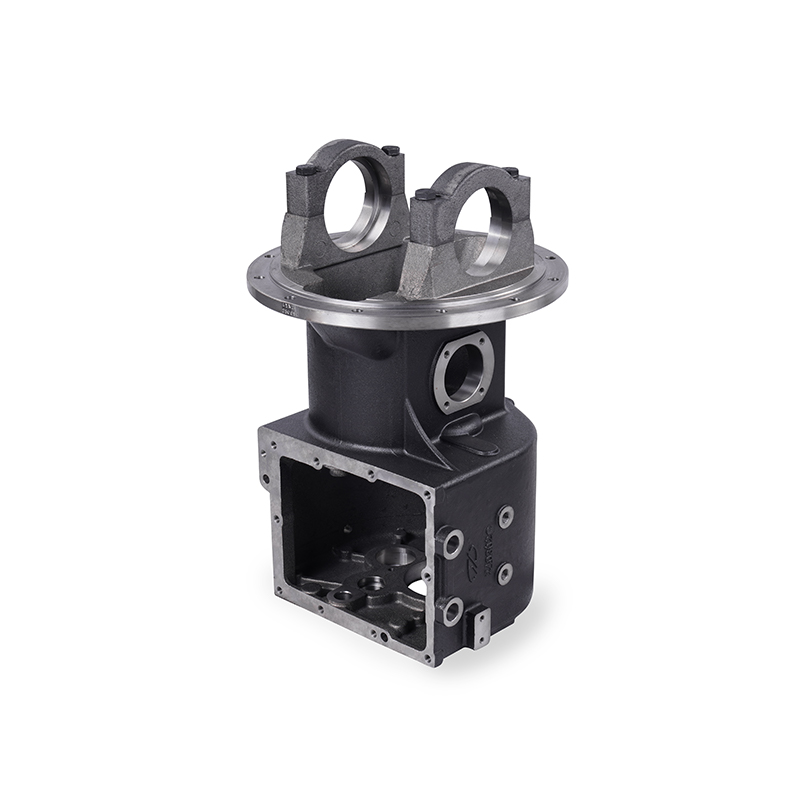
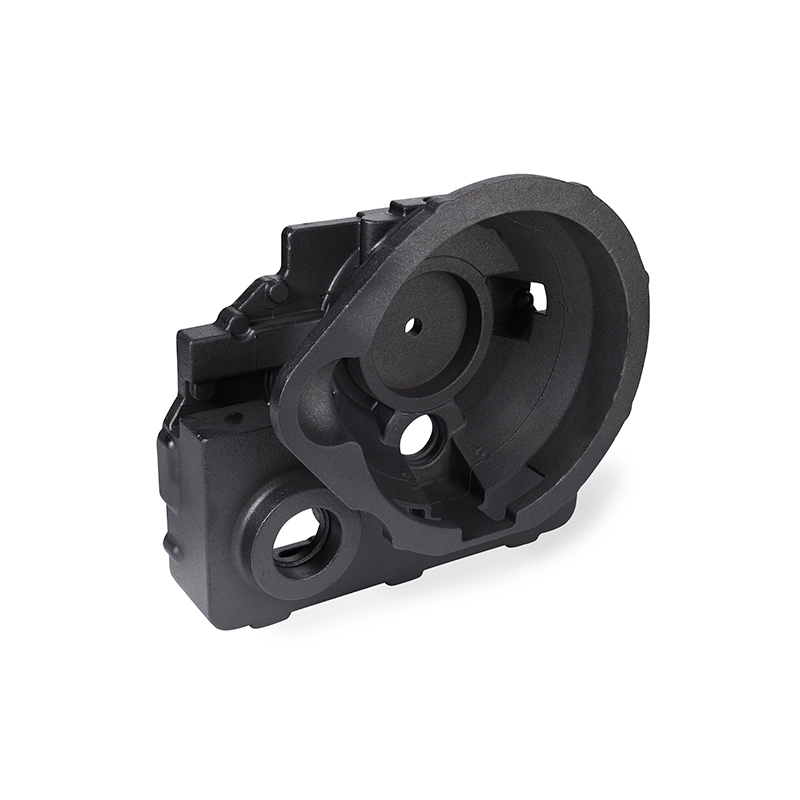
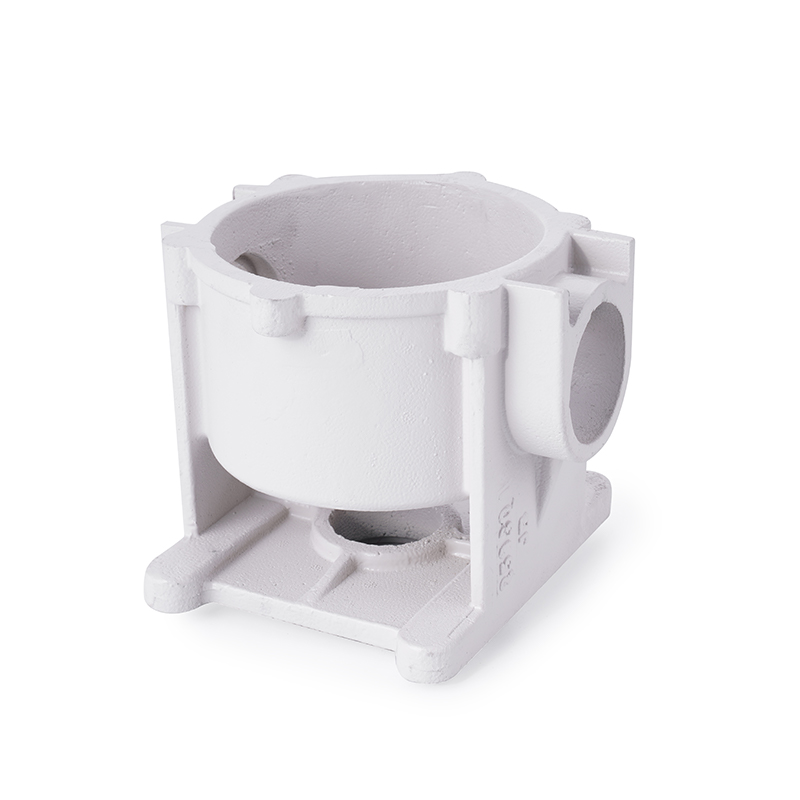 Ductile Cast Iron Gearbox Housing for Agricultural EquipmentIdeal for dynamic loading conditions, this housing offers superior toughness and impact resistance, ensuring reliable power transmission in demanding field operations.View Product →
One of the most telling differences is how these materials fracture. Grey iron fractures along the graphite flakes, giving a rough, dark gray fracture surface. Because the flakes act as internal notches, grey iron has little to no plastic deformation before failure. Ductile iron, on the other hand, exhibits a silvery, fibrous fracture with visible necking due to the spherical graphite and a metallic matrix that can stretch. In the foundry, we often perform simple fracture tests on sample coupons to quickly verify material quality before sending parts for further machining.
Grey iron is famously machinable: the graphite flakes act as a natural lubricant, allowing higher cutting speeds and longer tool life. Ductile iron is more abrasive because of its stronger matrix and requires harder cutting tools (e.g., carbide or ceramic), but modern tooling handles it routinely. Both materials can be cast in sand molds, but ductile iron requires more careful control of the magnesium addition and inoculation to achieve the desired nodularity. Our foundry has extensive experience with both processes, producing over 10,000 tons of grey and ductile iron castings annually for industries from agriculture to construction machinery. If you are evaluating a new design, we can help you decide which material offers the best balance of performance and cost for your specific production volumes.
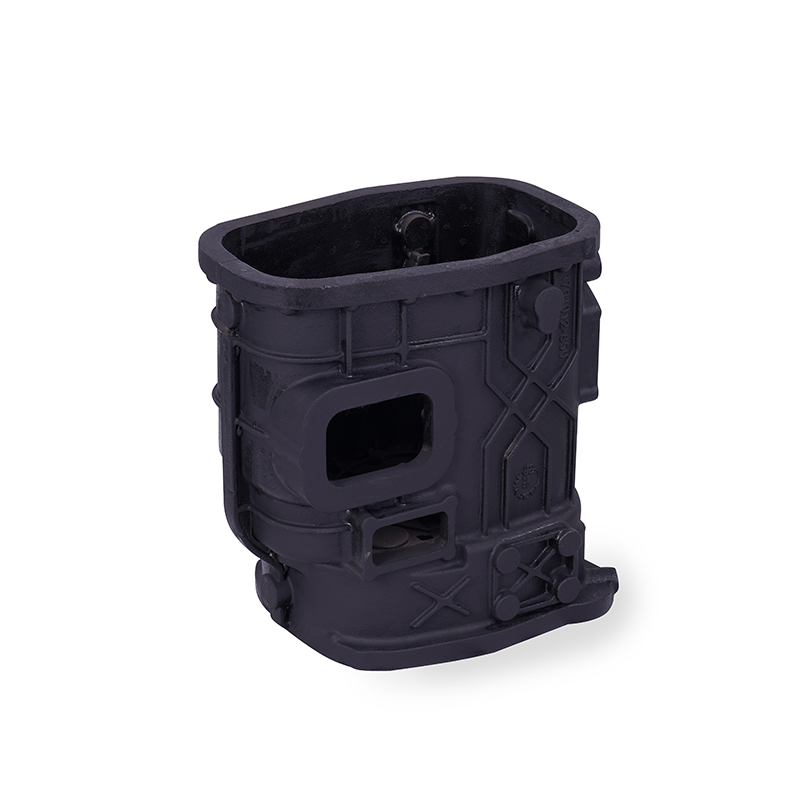
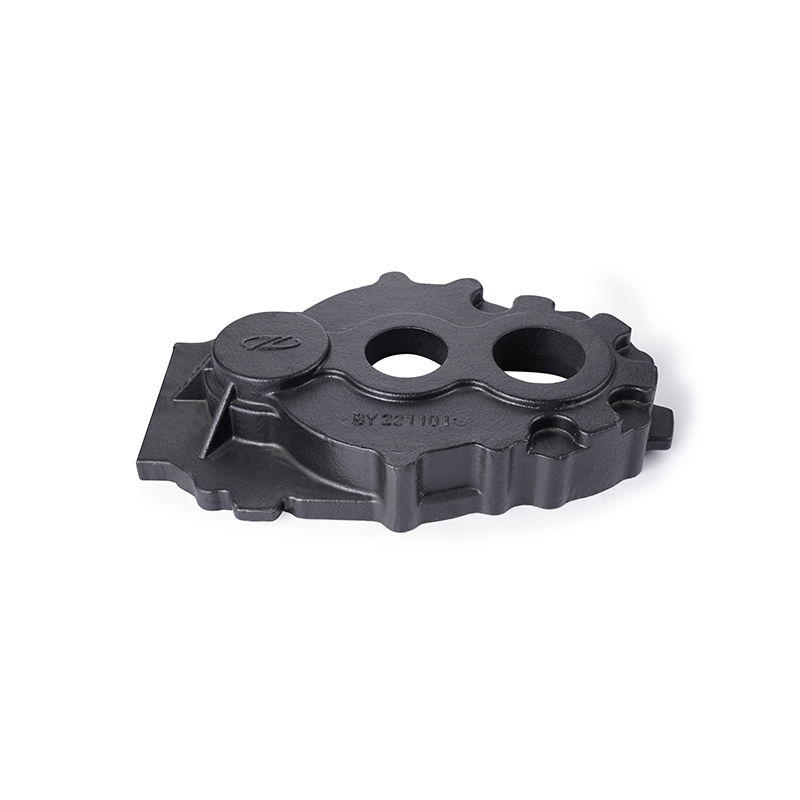
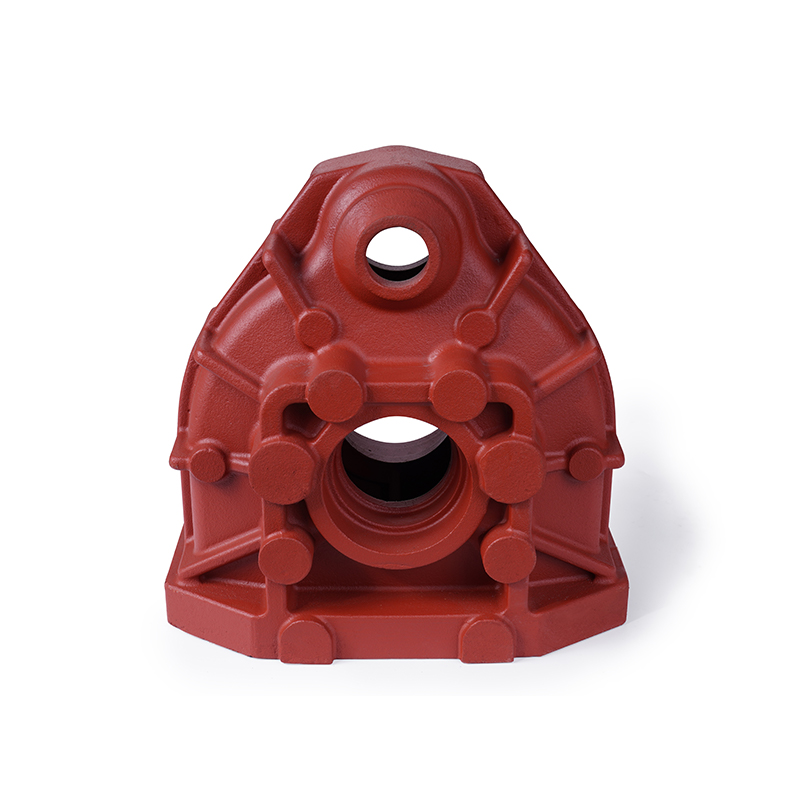 Gray Cast Iron Gearbox Housing for Reducer ApplicationsA cost-effective protective casing with good machinability and natural lubrication, designed to house gears and bearings while dissipating heat effectively.View Product →
Tractor transmission housings, lift covers, and gearboxes often use grey iron for its damping and affordability, while high-stress components like half-axle housings and brackets are better served by ductile iron to resist shock loads from rough terrain.
Engine blocks and flywheel housings are traditionally grey iron for thermal and acoustic reasons. However, modern diesel engine bearing caps and suspension knuckles increasingly use ductile iron to save weight while maintaining strength.
Forklift transmission cases, gearbox housings, and axle tubes are commonly grey iron, but any component that may experience impact—like lifting brackets or pivot supports—benefits from ductile iron’s toughness. For a deeper dive into how these materials serve the construction industry, check out our guide on construction machinery cast iron castings.
Motor housings and gearbox bearing covers are often grey iron for smooth, quiet operation, while motor bases may be ductile iron when higher dynamic loads are present.
At Jiubao, we have found that the best results come from open discussions about the part’s operating conditions. We recommend considering the following questions:
If you can answer these, you are already halfway to the right decision. And if you are unsure, our engineering team is always available to review your application and suggest the most suitable iron grade.
To sum up, grey cast iron and ductile iron each have strengths that make them indispensable in different scenarios. Grey iron excels when damping, thermal conductivity, and low cost are priorities; ductile iron wins when strength, ductility, and impact resistance are needed. We produce both materials daily in our foundry, and we have seen over and over that choosing the correct one extends product life and reduces warranty issues. Whether you need a high-volume grey iron gearbox housing or a ductile iron bracket with critical safety requirements, we can deliver castings that meet your specifications. Feel free to reach out to discuss your next project.





 русский
 日本語
日本語